
Relentless Police Crackdown Unmasks Bedfordshire’s Drug Underworld After Machete Standoff and Cannabis Factory Busts
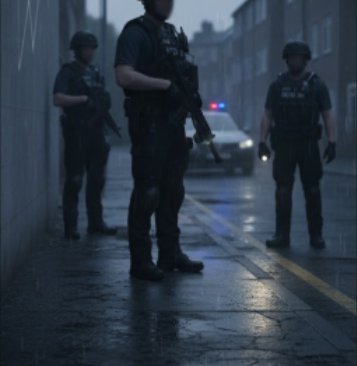
Screaming sirens sliced through the morning calm in Bedford as police, backed by fire crews and specialist negotiators, moved in on a suburban residence suspected of harboring one of several illicit cannabis operations discovered across the county this week. In the moments that followed, a suspected cultivator climbed onto an unstable rooftop in a desperate attempt to evade justice. Officers, refusing to back away, secured the perimeter while fire personnel deployed an aerial platform for the safe extraction and arrest of the fugitive. The scene was dramatic, yet it was only the beginning: this operation forms the backbone of an aggressive new campaign by Bedfordshire Police to dismantle organized crime networks that have turned otherwise quiet neighborhoods into battlegrounds for the illegal drug trade.
The Orchestration of a Countywide Sweep
Authorities acted on intelligence gathered over months, targeting a web of suspects operating across Marlborough Road in Bedford, Millbrook’s Station Road, and four addresses spanning Ashcroft Road, Paddock Close, and Fleeshman Road in Luton. The scope was unprecedented for the region. By week’s end, officers had seized several hundred thriving cannabis plants and “thousands of pounds worth” of Class A narcotics—including cocaine and heroin—shocking many residents who had been unaware such high-stakes criminality had taken root so close to home.
During the raid on a Millbrook address, a suspect’s reckless escape attempt onto a dangerous rooftop only underscored the precarious nature of these illicit enterprises. Expert negotiators, accustomed to high-stress scenarios, coordinated with firefighters to resolve the situation quickly and safely. Such cooperation illustrates the evolving approach to organized crime intervention, where policing is not only about force but strategic crisis response.
In one especially high-alert incident, sharp-eyed CCTV operators on Midland Road, Bedford, picked up a male suspect brandishing what appeared to be a machete in public. Officers intercepted him, promptly discovering significant quantities of cocaine and heroin in his possession as well. These events speak to the intertwined nature of drug distribution and violent criminality—a convergence increasingly documented not just in Bedfordshire but across the UK, as organized traffickers arm themselves to maintain dominion over their lucrative, illegal markets.
Examining the Roots: Why Are Cannabis Factories Proliferating?
The rise in cannabis factories, often run covertly in rental properties or abandoned buildings, has been tied by experts to several key drivers. Senior policy analysts point to the profitability of indoor cultivation, reduced risk compared to trafficking imported drugs, and growing demand fueled partly by social misconceptions about the relative harmlessness of cannabis compared to harder substances. According to the National Crime Agency, criminal organizations have become adept at using sophisticated hydroponic systems to maximize yields while minimizing the likelihood of detection.
Local authorities stress, however, that the impact stretches far beyond simple drug supply. Such operations are often linked to broader conspiracies involving money laundering, labor exploitation—sometimes including trafficked minors—and other forms of organized illegal activity. As a detective with Bedfordshire’s Serious and Organised Crime Unit explained, “Every illegal grow we dismantle is a node in a much larger criminal network. We’re disrupting cash flow, blocking reinvestment in other illegal trades, and making communities safer.”
Policing on the Offensive: Strategies, Tactics, and Challenges
Detective Chief Superintendent Duncan Young, speaking for Bedfordshire Police, highlighted the breadth of resources deployed against the drugs trade: “These operations were carried out by teams from across our force, from Community Officers to specialists from our Drugs Focus desk. It evidences that we are relentlessly targeting drugs supply and trafficking. We know that it is at the root of crime both in Bedfordshire and further afield. Drugs remain the main commodity of choice for organised criminals and a priority for our activity.”
Police sources confirm this operation was part of a multi-agency campaign spanning weeks, coordinated to act on actionable intelligence while minimizing risks to bystanders and suspects alike. These efforts included the simultaneous clearing and closure of factories stretched across multiple towns, with resulting seizures that will have a measurable short-term effect on street-level supply.
The logistics of such raids demand precision. Officers typically surround target locations before dawn, employing specialized equipment to breach fortified entrances—many grows are shielded by steel doors, hidden cameras, and elaborate alarm systems. A former undercover officer explained that growers often booby-trap properties, both to deter rivals and delay police during raids.
The Human Toll of Organised Drug Operations
Cannabis factories and their accompanying criminal activity rarely exist in isolation from the broader community. Experts in criminology and community policing stress the collateral effects on nearby residents: frequent power outages, unexplained building modifications, increased foot traffic at odd hours, and the constant threat of violence.
Locals often report increased anxiety, as neighborhoods transform under the shadow of organized crime’s reach. Community activist groups, working closely with authorities, urge vigilance and the reporting of suspicious activities—a point Bedfordshire Police have repeatedly emphasized. As one veteran community officer observed, “The success of our interventions depends on the courage and cooperation of neighbors who refuse to let criminality dictate the character of their streets.”
Machetes and Class A: The Symbiosis of Drugs and Violence
While the presence of cannabis grows may seem benign to some, their association with other criminal elements is undeniable. The machete incident on Midland Road is hardly an isolated event; Bedfordshire has recently seen a spike in violent crimes involving bladed articles, many directly linked to disputes over control of drug distribution territories. Recent figures published by the UK Home Office reveal that knife crime remains higher in regions where drug trafficking is most pronounced.
This dangerous symbiosis is not confined to street-level dealers. Police investigations have revealed that local cannabis production rings frequently answer to larger organized crime syndicates, some with international reach. These groups supply weapons, enforce “turf wars,” and orchestrate the movement of both drugs and money up the supply chain—a reality confirmed by recent academic research into the organizational dynamics of the UK’s illicit drug trade.
Legal Framework and the Duty of Reporting
British law is unequivocal: cultivating, supplying, or possessing cannabis remains illegal (except for tightly regulated medicinal use), and the penalties for involvement in Class A drug trafficking are severe. The UK’s Misuse of Drugs Act 1971 classifies cannabis as a Class B substance; meanwhile, cocaine and heroin, both found in these raids, are Class A—attracting the harshest possible sentences.
Authorities are empowered to close properties under the Anti-Social Behaviour, Crime and Policing Act 2014 if drug-related criminality is proven. Such closures not only disrupt current operations but serve as a deterrent to potential landlords or tenants considering allowing their premises to be used for illegal activities.
Recent charges issued against those arrested this week include cultivation of cannabis, possession with intent to supply Class A substances, and possession of a bladed weapon. Legal experts confirm that conviction on such charges can mean years in prison and the forfeiture of any assets found to be linked to criminal activity.
Tracing the Ripple: Community Impact and Next Steps
The fallout from these sweeping enforcement actions will continue to be felt across Bedfordshire. For every factory shuttered and suspect detained, a message reverberates far beyond the immediate crime scene: law enforcement will pursue and prosecute the organizers behind these illicit enterprises. The public response has generally been supportive, though some local critics caution against excessive police presence. Policy specialists note, however, that focused, intelligence-led policing is far more effective—and less disruptive—than blanket zero-tolerance sweeps.
Social services are also involved in the aftermath. Properties used for cultivation must be remediated, both for public health and to restore trust in the area. Utility companies often partner with police to address electrical flagrant power theft, a hallmark of illegal grows and a frequent cause of dangerous fires.
Education and Prevention: Turning the Tide
Tackling the organized cultivation and distribution of cannabis, as well as the resulting surge in violent crime, is not solely a law enforcement challenge. Investigative journalists and criminologists alike argue for holistic strategies that blend targeted operations with demand-side prevention: public education, youth outreach, and economic investment in communities most susceptible to criminal infiltration.
Educators, youth workers, and drug prevention charities are stepping up efforts in affected areas to counter recruitment by criminal groups. According to a senior community outreach advisor, “Breaking the cycle starts with young people. If they see only risk and no opportunity, the promises of the drug trade become all the more alluring.”
Conclusion: A Message of Vigilance and Will
As the clouds of criminality shift over Bedfordshire’s urban and rural landscapes, residents are left to weigh the implications of recent dramatic law enforcement successes. The message from the police remains unwavering: the war on drugs, and the violence shadowing it, will be fought on every front—from the attic grows of unremarkable houses to the public streets where criminals brandish machetes.
The next chapter for Bedfordshire will depend not only on bold action taken by police, but on an alert and engaged citizenry, willing to defend community values and refuse the normalization of organized crime. The story unfolding here is a microcosm of a much broader national struggle, one that will require vigilance, cooperation, and a united stand against the corrosive forces preying on Britain’s neighborhoods.