
Police Raid Uncovers Extensive Cannabis Operation in Clifton, Sparks Debate on Community Safety and Criminal Tactics
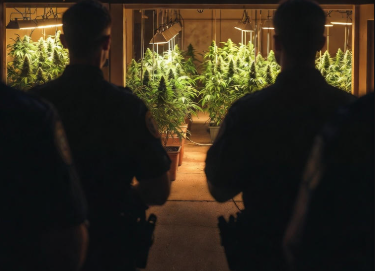
When officers stormed a quiet Clifton residence in the early hours of October 8, they uncovered a sophisticated cannabis operation stretching across three rooms – an incident that has cast a revealing light on the growing prevalence and risk of clandestine drug farms within the United Kingdom’s residential neighborhoods.
Albjon Proi, aged 27, was reportedly fast asleep at his home on Brinkhill Crescent, Clifton, when multiple members of Nottinghamshire Police entered his property under warrant, forcibly breaching the front door. The raid, prompted by intelligence designating the address as a likely cannabis grow site, resulted in the discovery and subsequent seizure of approximately 190 cannabis plants along with an array of specialized cultivation equipment, each room retrofitted with fans and high-intensity lighting to optimize plant growth. Law enforcement officials also described dangerously bypassed electrical wiring throughout the house—a common but hazardous practice among illicit cultivators seeking to evade detection and minimize utility costs.
Proi offered no resistance and was quickly detained at the scene by the search team. He later appeared at Nottingham Crown Court, where he pleaded guilty to the offense of producing cannabis. The presiding judge sentenced Proi to two years and four months behind bars—a penalty intended not only to punish but also to deter others from engaging in large-scale cannabis production.
Cannabis Farms: The Methods and the Motive
The operational setup discovered at the Clifton address bears the hallmarks of a burgeoning trend in UK drug enforcement: commercial-scale cannabis farms embedded within ordinary, often rented, residential properties. Such operations typically involve the extensive modification of pre-existing electrical and ventilation systems, frequently without regard to basic safety. Assistant Chief Constable Adam Ball, who has overseen region-wide anti-narcotics initiatives, points out that “buildings can become dangerous as a result of fire risks, unlawful abstraction of electricity, fumes, and water damage.” The risks extend beyond the specific property, with experts warning of the potential for fire to spread to neighboring homes—an acknowledged “serious fire hazard.”
Industry data substantiates these concerns. In recent years, UK police have seized more than a million cannabis plants annually, plants often valued collectively in the hundreds of millions of pounds. Roughly 90% of cannabis supplied within the country emanates from such residential grows, underscoring their role in both supply chains and broader criminal ecosystems. According to specialists in organized crime, these covert farms are often one component of larger syndicates whose operations can encompass human trafficking, money laundering, and violent crime.
Community Impact: Public Safety vs. Illicit Enterprise
Inspector Steve Dalby of Nottinghamshire Police, present during the raid on Proi’s property, issued a pointed statement: “Cannabis farms bring nothing but issues to neighborhoods.” Far from being victimless undertakings, these operations frequently bring negative externalities: electrical fires, water damage, exposure to hazardous chemicals, and increased crime. “They pose a significant and serious fire hazard,” Dalby warned, referencing the ad hoc electrical work required to power dozens or even hundreds of heat and ventilation devices.
Local residents often remain unaware of grow operations until law enforcement intervenes, but the indirect effects—periodic power outages, unusual odors, condensation buildup—may percolate through the surrounding area. Community advocates and local council members have raised concerns about the residual damage and disruption caused to both physical infrastructure and communal sense of security.
The Legal Context: Cannabis Cultivation in the UK
Cannabis is classified as a Class B controlled substance under the Misuse of Drugs Act 1971. Cultivation and production of cannabis—the activities for which Proi was prosecuted—are considered serious criminal offenses. Production carries the potential for substantial prison terms, property confiscation, and the application of the Proceeds of Crime Act to recover financial benefits gained through illegal activities.
The law distinguishes between cultivation and production: cultivation primarily concerns growing plants, while production encompasses the full process leading to a usable drug product. Prosecutors focus on the scale and apparent commercial intent when determining charges, favoring harsher production-related prosecutions when the operation indicates broader supply activity or links to criminal enterprises.
The Economics Behind Urban Cannabis Farms
Multiple factors contribute to the proliferation of cannabis farms in urban and suburban Britain. The high street value of cannabis, combined with comparatively low production costs once a property is converted, makes the risk appealing for enterprising criminals. Criminal networks often utilize rental properties to avoid detection and shield themselves from property seizure, leveraging anonymous lease agreements and frequent property transfers to mask true ownership.
A criminologist with expertise in drug markets notes, “The business model is simple: maximize yield per square foot, minimize risk of detection.” The technical sophistication of these grows—from automated light cycles to advanced hydroponic systems—reflects a professionalization reminiscent of legitimate horticultural operations. Yet the absence of regulation introduces severe risks not only to the growers and their property but to the surrounding community as well.
Health Risks and Misinformation: Maintaining E-E-A-T
It is crucial to note that despite some claims regarding the medicinal potential of cannabis, the British government strictly regulates its production and possession. Health-related assertions about cannabis remain highly contested, with only limited forms of medical cannabis available legally, and exclusively with specialist prescription. Claims of safety or therapeutic benefit must be contextualized by reference to the UK government’s stance: recreational cannabis use remains illegal and the subject of rigorous law enforcement. Sources such as the NHS and the National Institute for Health and Care Excellence advise that cannabis use—particularly the high-potency strains typical of commercial farms—carries meaningful risk, including adverse mental health outcomes.
Law Enforcement Strategy and Capacity
Police responses to cannabis production have evolved in both tactics and scale. Intelligence-led operations, such as the one resulting in Proi’s arrest, increasingly rely on community tip-offs, analytic surveillance, and the coordinated deployment of specialized search teams. The Nottinghamshire raid exemplifies a broader trend toward decisive, pre-dawn interventions designed to minimize resistance and evidence destruction.
Nottinghamshire’s track record aligns with national figures—thousands of plants seized each year, frequent property seizures, and court actions intended to disrupt supply chains. Police routinely call for community support, citing the importance of vigilance regarding tell-tale signs: blacked-out windows, persistent condensation, or a sudden increase in property modifications and electrical work.
Landlord Liability and Property Damage
Landlords are often unwitting facilitators of these operations, as offenders typically lease properties under false pretenses. Industry associations have called on property owners to conduct regular inspections and to be wary of complaints regarding wiring or unexplained odors, emphasizing that insurance policies may not cover damage resulting from illicit activity. When discovered, landlords must liaise with law enforcement and may be required to undertake costly repairs to restore safe living conditions.
The Wider Criminal Ecosystem
Commercial cannabis cultivation seldom operates in isolation. According to statements from law enforcement and analytical review, these operations may form part of a larger criminal structure. Financial proceeds from cannabis can be funneled into money laundering schemes, enabling further illegal ventures. Occasionally, properties discovered to house grow operations have links to organized crime, and police investigations may produce evidence of human trafficking or exploitation.
A senior policy analyst specializing in drug interdiction clarified, “Not all grow operations are part of gangs, but the most lucrative ones almost always are. This links them to broader threats such as violent crime, even if direct violence is seldom reported at the original scene.”
Reactions from Criminal Justice and Public Policy Sectors
The criminal justice system continues to grapple with the dual challenge of deterring commercial cannabis production while addressing the social circumstances that facilitate it. Calls for revised legislation—either toughening penalties or, in some circles, considering regulated legalization—reflect ongoing debate on how best to protect public health and safety.
Some commentators have pointed to the international context, noting that several countries now maintain regulated cannabis industries. However, within the UK, both Crown Prosecution Service and police organizations maintain a clear commitment to upholding existing law, emphasizing the harm caused by criminal cultivation.
Sentencing and Deterrence
Sentences such as the two years and four months imposed on Proi are intended to act as both specific and general deterrents. The courts balance factors such as the scale of the operation, the defendant’s level of involvement, and evidence of financial gain or organized crime ties. In cases lacking these aggravating elements, sentences may be lower, particularly where the defendant is found to have acted under coercion or without broader criminal intent.
Final Reflections: Lessons from the Clifton Raid
The events surrounding the raid in Clifton and subsequent prosecution of Albjon Proi offer a revealing window into the realities of urban cannabis cultivation in 2025 Britain. Beyond the criminal conviction lies a cautionary tale—of the risks to health and safety, the enduring adaptability of illicit markets, and the ongoing challenge facing UK communities and authorities alike.
Recent statistics bolster the case for ongoing vigilance: more than a million cannabis plants seized annually; countless properties damaged or rendered uninhabitable; and entire neighborhoods exposed to risks far exceeding the perceived “victimless” nature of the cannabis trade.
Inspector Dalby’s closing remarks encapsulate the police view: “Operations like these aren’t just about arresting offenders—they’re about restoring safety, deterring future crime, and protecting the wider community from avoidable harm.” As this case demonstrates, addressing clandestine cannabis production requires not only decisive law enforcement, but also public awareness and cross-sector cooperation.