
U.S. Cannabis Market Poised to Hit $148 Billion by 2035 Amid Legalization Momentum and Medical Expansion
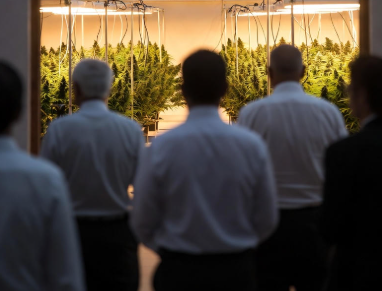
The American cannabis industry is entering a historic phase of growth that is transforming economics, medicine, and consumer culture. Once confined to the margins of legality, cannabis has evolved into an influential economic powerhouse with legitimate investment potential and nationwide socio-political relevance. Recent market assessments estimate the U.S. cannabis sector to be worth approximately $49.27 billion in 2024, with forecasts suggesting rapid expansion to $148.07 billion by 2035. This sharp upward trajectory reflects more than economic promise—it underscores a complete societal redefinition of cannabis in American life.
From Social Stigma to Economic Engine
The market’s expansion reflects decades of shifting attitudes and evolving legislation. Cannabis has moved from prohibition to regulation, and its acceptance continues to strengthen across both medical and recreational domains. The near-tripling of market value projected for the next decade illustrates the public’s growing trust, as well as entrepreneurial agility in navigating complex state laws.
State-level legalization remains the industry’s most decisive growth factor. With each new jurisdiction approving cannabis use, more consumers enter the market, boosting tax revenues and job creation. This has turned cannabis into a vital contributor to state and local economies. At the same time, the dynamic regulatory landscape has spurred innovation in product formulation, retail design, and supply chain infrastructure. Businesses that adapt quickly to evolving laws are establishing strong competitive advantages as new markets open.
Medical Research and Therapeutic Acceptance
Increased clinical research and medical validation have elevated cannabis beyond its recreational reputation. Studies continue to highlight its efficacy for managing chronic pain, mitigating chemotherapy-related nausea, easing epileptic seizures, and helping individuals coping with PTSD. These findings are expanding patient access and drawing investment into medical-grade cannabis products.
As understanding of cannabinoids deepens, the pharmaceutical potential of cannabis grows clearer. Research institutions and biotech firms are directing resources toward isolating specific compounds for precise therapeutic use. This scientific momentum is helping reduce stigma and transforming how the public and medical community view cannabis-based treatments.
Consumer Shifts and Evolving Preferences
While smoked flower remains a staple, consumption trends are diversifying rapidly. Modern consumers are gravitating toward cleaner, alternative methods such as edibles, tinctures, beverages, and topical creams. The demand for precise dosing and wellness-oriented products aligns with a national shift toward healthier, more controlled lifestyle choices.
This diversification supports the rise of specialized brands that deliver curated experiences. Craft cannabis, drawing inspiration from the microbrewery movement, emphasizes small-batch production, sustainable farming, and distinct strain genetics. Consumers increasingly prioritize quality, flavor, and origin over mass production, fueling a premium submarket that competes on artisanal value rather than volume.
The Technology Revolution Driving Cannabis Commerce
Technology has become a critical driver of modernization in the cannabis industry. Advanced systems for seed-to-sale tracking enhance transparency and regulatory compliance, while data analytics tools enable brands to tailor strategies to precise consumer profiles. E-commerce integration and delivery platforms are making purchasing seamless and accessible, particularly in urban centers.
Investment in logistics, retail automation, and predictive analytics is redefining how cannabis products reach consumers. This digital transformation is expected to accelerate as companies adopt artificial intelligence for demand forecasting, personalized product recommendations, and efficient inventory management—all essential for scaling operations while maintaining compliance.
Market Consolidation and Emerging Power Players
With exponential growth comes structural transformation. Analysts anticipate significant consolidation as larger multi-state operators acquire smaller independents to expand their national footprints. These mergers are driving economies of scale and ensuring supply consistency, particularly as federal reform looms on the horizon.
Still, smaller craft-focused producers are carving out influential niches by emphasizing authenticity and community engagement. This dual structure—consolidated corporations alongside boutique innovators—creates a balanced ecosystem that mirrors dynamics seen in other maturing consumer industries like alcohol and coffee.
Federal Reform and Institutional Investment Potential
The single most transformative opportunity for the cannabis sector lies in federal legalization or rescheduling. Should national laws shift, cannabis companies would gain access to essential banking services, the ability to move products across state lines, and inclusion within large-cap U.S. stock exchanges. Institutional investors have largely stayed out of the market due to existing restrictions, but this barrier’s removal could unleash massive capital influxes, pushing market growth far beyond current projections.
Federal clarity would also bring tax reform and standardized compliance systems, allowing businesses to operate more efficiently. Politically, a nationwide regulatory framework would bridge the gap between state policies and federal oversight, giving the industry a more unified structure for sustainable expansion.
Social Equity and the Ethics of Expansion
Economic progress is only one dimension of the modern cannabis narrative. The movement toward legalization also carries a profound social responsibility to address the historical inequities perpetuated by prohibition. States are steadily integrating social equity programs that prioritize licensing opportunities for communities most affected by past enforcement practices.
These initiatives serve both as moral imperatives and engines of innovation, introducing new entrepreneurs and diverse voices into the marketplace. The inclusion of equitable business structures ensures that as the industry scales, it remains accountable to the communities that bore the brunt of its criminalization era.
Long-Term Outlook: A Mature and Resilient Industry Ahead
By 2035, the U.S. cannabis industry is expected to be unrecognizable from its 2024 form. Maturation will bring greater research-driven product development, sophisticated branding, and targeted medical breakthroughs. As consumer demographics broaden, demand will spread across generations and lifestyles, solidifying cannabis as a mainstream wellness and entertainment commodity.
Challenges remain, including navigating inconsistent state policies, ensuring quality control, and achieving environmental sustainability. Yet the sector’s adaptability has already proven formidable. The next decade will test companies’ abilities to balance innovation with regulation while maintaining consumer trust in an increasingly complex market.
The Green Horizon
From underground cultivation to high-profile investment portfolios, cannabis epitomizes the economic reinvention of a once-taboo substance. Fueled by science, reform, and innovation, its path reflects a rare convergence of cultural acceptance and market opportunity. The current momentum points not just to expanding profits but to the full normalization of cannabis as an integral, legitimate sector of the American economy.
As 2035 approaches, the industry’s projected $148 billion valuation stands as more than a financial benchmark—it symbolizes a societal milestone, marking the moment when cannabis firmly took root as a pillar of American enterprise.